history
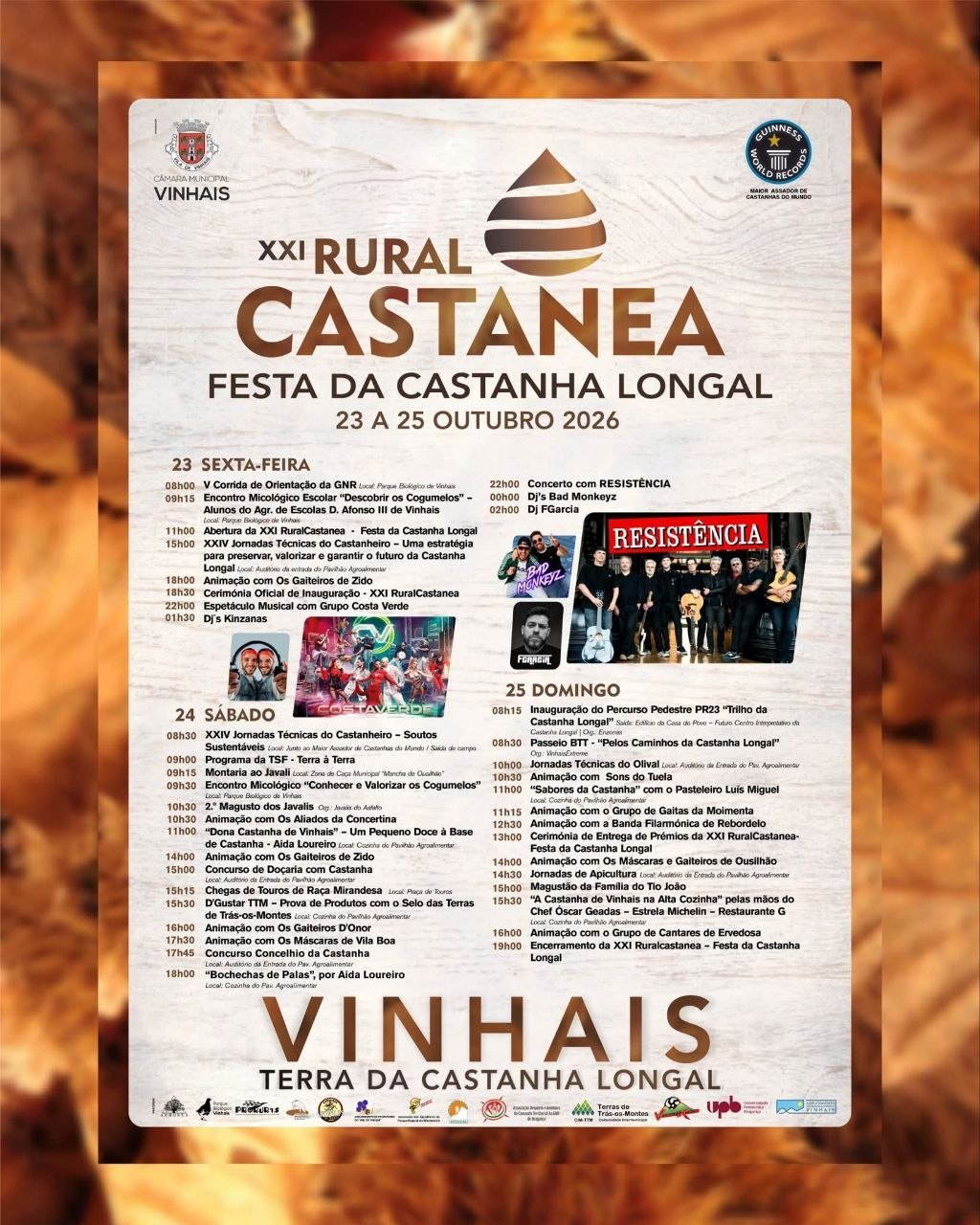
There are places you inhabit and places you feel. Vinhais, in the heart of the northeastern Trás-os-Montes, is one of the latter. Nestled between mountain and valley, it breathes the crisp air of the heights of Bragança and holds, in its stones and its hills, an ancient memory that refuses to fade.<p>The origins of Vinhais are lost in a distant time, with deep roots that stretch back to far-off eras. It is a land of History, whose first steps were taken long before written chronicles, leaving visitors with the sensation of treading ground that has witnessed peoples, faiths and centuries pass by. That antiquity is not merely a fact — it is something sensed in the silence of the chapels, in the layout of the streets and in the solidity of the buildings that have withstood the weight of time.<p>The religious heritage of Vinhais is, perhaps, its most eloquent treasure. The Igreja de São Facundo (Church of São Facundo), with its foundation attributed to the Visigoths, is a living testament to those distant roots — a place where stone speaks of a devotion that has crossed generations. Alongside it stand the Convento de São Francisco and the Seminário dos Missionários Apostólicos, a complex classified as a Property of Public Interest, which lends the town a rare monastic and spiritual dignity. The Igreja Matriz de São Cipriano welcomes its faithful day after day, while the Capela de Santo Amaro quietly preserves its share of popular devotion. It is a collection of unique value, made to be explored at a leisurely pace, as though following a thread of sacred stories that unfolds throughout the town.<p>But Vinhais does not live by the stone of its churches alone. It lives through its people — a community deeply attached to the land, who have kept alive the traditions inherited from their ancestors. Here, customs are not museum pieces; they are practices that continue to set the rhythm of the year, to mark gatherings, and to bring families and neighbours together around what truly matters. It is a community where collective memory is passed from parents to children, where the way of making, celebrating and living together retains an authentic flavour that the hurried world has not managed to erase.<p>Nature is, in Vinhais, a constant companion. Agriculture shapes the landscape and gives meaning to daily life, and the produce of the land is a source of legitimate pride. Among them reigns the Bísara-breed pig, raised with ancient knowledge, which is the soul of one of the region's greatest gastronomic treasures: the celebrated Fumeiro de Vinhais (smoked and cured charcuterie from Vinhais). The smoked sausages and cured meats, matured at the slow pace of hearths and cold winters, are the calling card of a land that elevates fumeiro almost to an art form. The chestnut, generous and abundant in the Trás-os-Montes groves, is another fruit that defines the local palate and the livelihoods of its people.<p>At the table of Vinhais, those who seek truth and flavour will find their place. The cuisine is rich, varied and rooted in genuine, natural produce, with no artifice. It begins with soups and starters that whet the appetite, moves on to casulas, milhos and cuscos — hearty, peasant-rooted dishes of plenty and simplicity. The Posta à Mirandesa (a thick cut of Mirandesa beef), with its noble meat, and the oven-roasted kid, tender and aromatic, are the highlights of any meal in these parts. And to finish, nothing surpasses the homemade sweets, crafted by hand with time-honoured recipes, which close the table with the warmth of those who truly know how to welcome a guest.<p>Vinhais is, in the end, a place that invites you to linger. It invites you to climb its hills, to step inside its churches, to sit at its table and to talk with its people. It is one of those places in Portugal where past and present coexist without haste, where the rugged and beautiful landscape blends with the bold flavours of the fumeiro and the genuine hospitality of a people who have never forgotten where they come from. Those who visit carry away in their memory the scent of the earth, the taste of the Bísara pig and the certainty of having encountered a true Portugal.