history
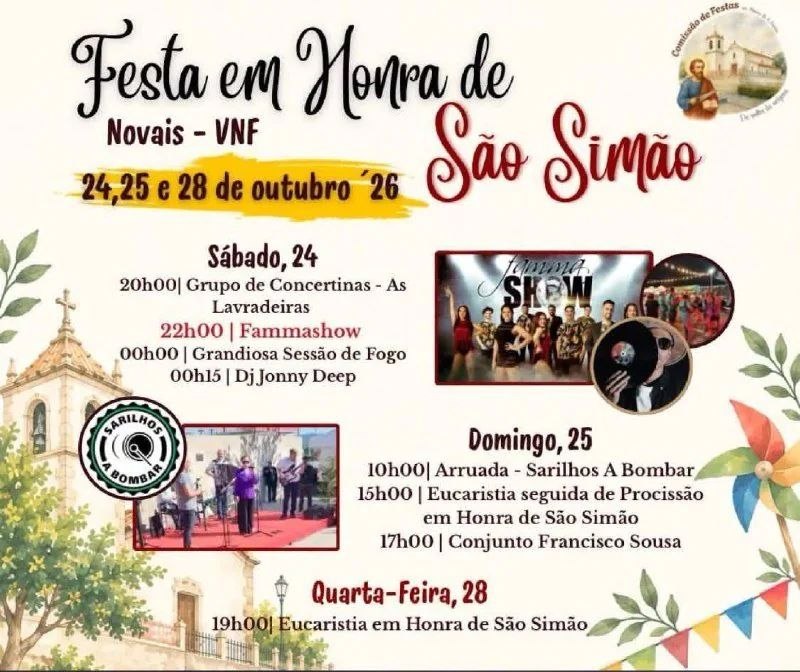
There are lands that hide in the dense green of Minho, along ancient paths and stone chapels, and Ruivães e Novais are two such lands in the municipality of Vila Nova de Famalicão. Walking side by side, each holds its own memory, its own saints and silences, and together they form a corner of Minho where time seems to slow down.<p>The history of these lands can be read in the traces the ground has kept. The archaeological site of São João de Perrelos bears witness that people were already living and working here long ago, in a continuity of generations that linked the remote past to today's villages. Places like these remind us that these parishes were not born yesterday: they were shaped by hands that tilled the soil, raised walls and left stones where the echoes of ancient life can still be felt.<p>The people of Ruivães e Novais are, above all, people of Minho — bound to the land, to their neighbours, to a community that gathers around its churches and traditions. They are a people who understand the value of hard work and mutual support, who keep alive the customs inherited from their parents and grandparents, and who make sharing — especially at the table and on feast days — one of the pillars of their way of life.<p>When it comes to heritage, there are places here that deserve a slow pace and an attentive eye. The Igreja de Ruivães (Church of Ruivães) is a landmark, a place of prayer and gathering for the local people, with that serene presence that parish churches hold in Minho villages. Nearby, the Igreja de São Miguel de Seide and the Igreja Paroquial de Vermoim shape the religious landscape of this region, while the Capela da Quinta da Carvalheira, more tucked away, shows how the estates and manor houses also knew how to preserve their own small sanctuaries. And in the background, always, the archaeological site of São João de Perrelos, inviting passers-by to imagine those who lived there long before us. These are soulful places, not to be visited in a hurry.<p>Traditions are the heart of these lands. In Ruivães e Novais, as throughout Minho, community life revolves around religious devotions and gatherings that bring the whole village together. Popular faith remains strong, and with it an entire legacy of customs passed from generation to generation: the bond with the parish, the care taken with the chapels, the joy of coming together in celebration. It is in this capacity to preserve what has been received that the community reveals its truest identity — a people who never forget where they come from.<p>At the table, Ruivães e Novais share with the whole municipality of Vila Nova de Famalicão a hearty and honest cuisine, built on warming flavours. Bacalhau à lagareiro (salt cod roasted with generous amounts of olive oil and potatoes), cabrito assado (roast kid), which fills the kitchens with its aroma on feast days, and cozido à portuguesa (a rich Portuguese boiled dinner), a dish of togetherness and abundance, are reliable presences at meals that bring families together. Rojões à moda do Minho (braised pork pieces in the Minho style) are perhaps the most faithful portrait of this land, with all their savoury richness and the ancient wisdom of making the most of the pig. From the rivers come dishes such as molhata de enguias (eel stew) and sopa de peixes do rio (river fish soup), memories of a riverside gastronomy that lives on. And to finish, the sweets: pão-de-ló de Famalicão (a soft, golden sponge cake from Famalicão), pirilau do Padre Ambrósio and bolo de noz (walnut cake), confections that close the meal with the sweetness that Minho knows how to give. To eat in these lands is, at its heart, to share the identity of a people who make generosity a gesture of hospitality.<p>Ruivães e Novais are, then, two Minho lands that invite you to slow your step: to enter a church, to sit at a table, to talk with those who live there. Those who seek them out will discover the tranquillity of the countryside, the satisfying weight of tradition and the certainty that, in these parts, the roots remain firmly planted in the ground.