what to see
Igreja Matriz da Raposa (Parish Church of Igreja Matriz da Raposa), a baroque temple from the 17th century, the spiritual heart of the village and the setting for one of the most attended romarias in Ribatejo.<p>Capela de São José, a testament to the ancient devotions of the parish.<p>Parque de Merendas da Raposa, a shady retreat for outdoor dining in the Ribatejo countryside.<p>Ponte da Raposa, spanning the Ribeira de Muge, beside the old rice fields.
about the place
In the municipality of Almeirim, in the district of Santarém, Raposa stretches along the road linking Almeirim to Coruche, amid wide farming fields. A land of rice cultivation, crossed by the Ribeira de Muge, it is home to a baroque-style church from the 17th century, the stage for one of the most popular romarias in the Ribatejo, and the serene Capela de São José (Chapel of São José).
history
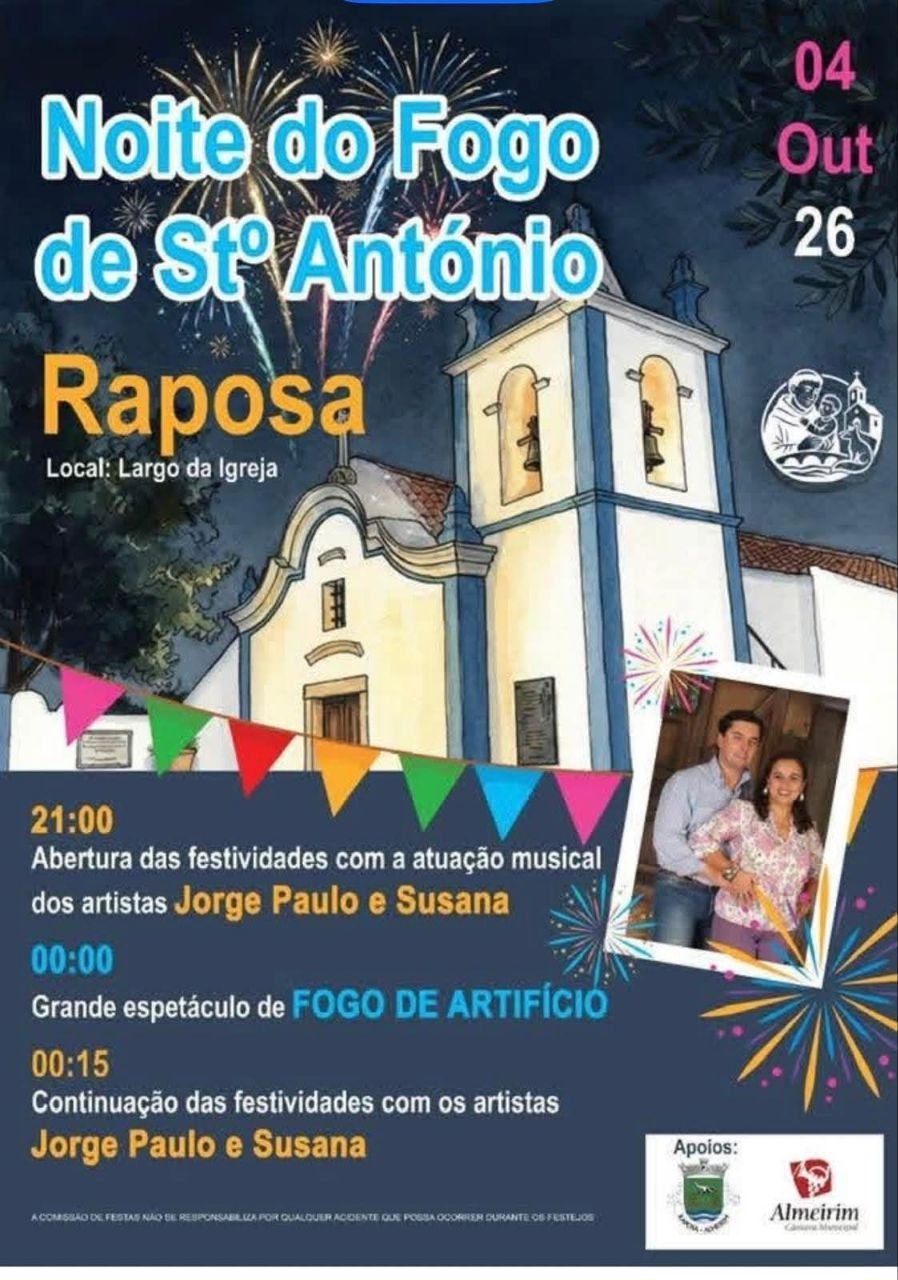
There are places that open up slowly to those who arrive, as if inviting them to sit and stay. Raposa, in the municipality of Almeirim, is one of those serene corners of the Ribatejo, stretching along the road that connects Almeirim to Coruche. Anyone passing through quickly realises they are in a place of wide fields, hardworking people, and traditions kept with pride.<p>The history of Raposa is, above all, the history of its people. It is a farming land, shaped by the slow rhythm of the seasons and the effort of those who knew how to make the land their livelihood. Among the occupations that took firm root here is rice cultivation, a tradition that still crosses both the table and the collective memory of the parish. It was through this patient labour, done with calloused hands and knowledge passed from generation to generation, that Raposa quietly but steadily built its identity.<p>Walking through the parish, visitors come across places that hold the soul of the community. The Igreja Matriz da Raposa (Parish Church of Raposa) is undoubtedly the spiritual heart of the land, a church that brings people together and has become the stage for one of the most popular and cherished pilgrimages in the whole of the Ribatejo. Close to the village houses, the Capela de São José (Chapel of São José) sits in devout silence, a witness to the ancient devotions that took root here. The Cemitério da Raposa completes this map of memory, keeping those who once lived here and loved this land.<p>But the heritage of Raposa is not made of stone and devotion alone. The Casa da Cultura, a multipurpose space restored and returned to the community, is now a meeting point where the cultural life of the parish takes shape, hosting initiatives that bring people together and keep community spirit alive. And for days of rest, the Parque de Merendas da Raposa offers the shade and tranquillity of a spot designed for lingering, eating outdoors, and savouring the peace of the Ribatejo countryside.<p>The traditions of Raposa are lived with the intensity that characterises places where the calendar is marked by festivals and devotions. Faith in the patron saints remains one of the threads that unite the community, with processions, religious celebrations, and an endless array of activities that fill the streets with movement and joy. These are moments when Raposa is dressed in festivity, when those who left return to their roots, and when bonds of neighbourliness and friendship are renewed to the sound of music and good company. These customs, lovingly preserved, are proof that Raposa remains a living land, proud of its roots.<p>At the table, Raposa reveals itself with the generosity of farming lands. Rice, the fruit of a tradition deeply rooted in its fields, reigns supreme and gives soul to dishes that form part of the local gastronomic heritage. The arroz de Santo António (a traditional rice dish associated with the feast of Saint Anthony) is one such icon, a dish that weds devotion with the pleasure of a fine meal. On festive days, duck takes pride of place, served with the care befitting great occasions. And for working days, the sopa à lavrador (a hearty farmhand's soup) warms the body and comforts the soul, a testament to an honest cuisine made from what the land provides. Raposa has no shortage of places where traditional Portuguese cooking is served from the heart, inviting all who arrive to taste the authentic flavours of this Ribatejo land.<p>Raposa is, in the end, one of those parishes that does not impose itself through noise, but wins people over through authenticity. It is a land of fields and rice, of churches and pilgrimages, of generous tables and welcoming people. Those who seek it out will find the most genuine Ribatejo — one that is lived without haste and remembered long after the journey home.