history
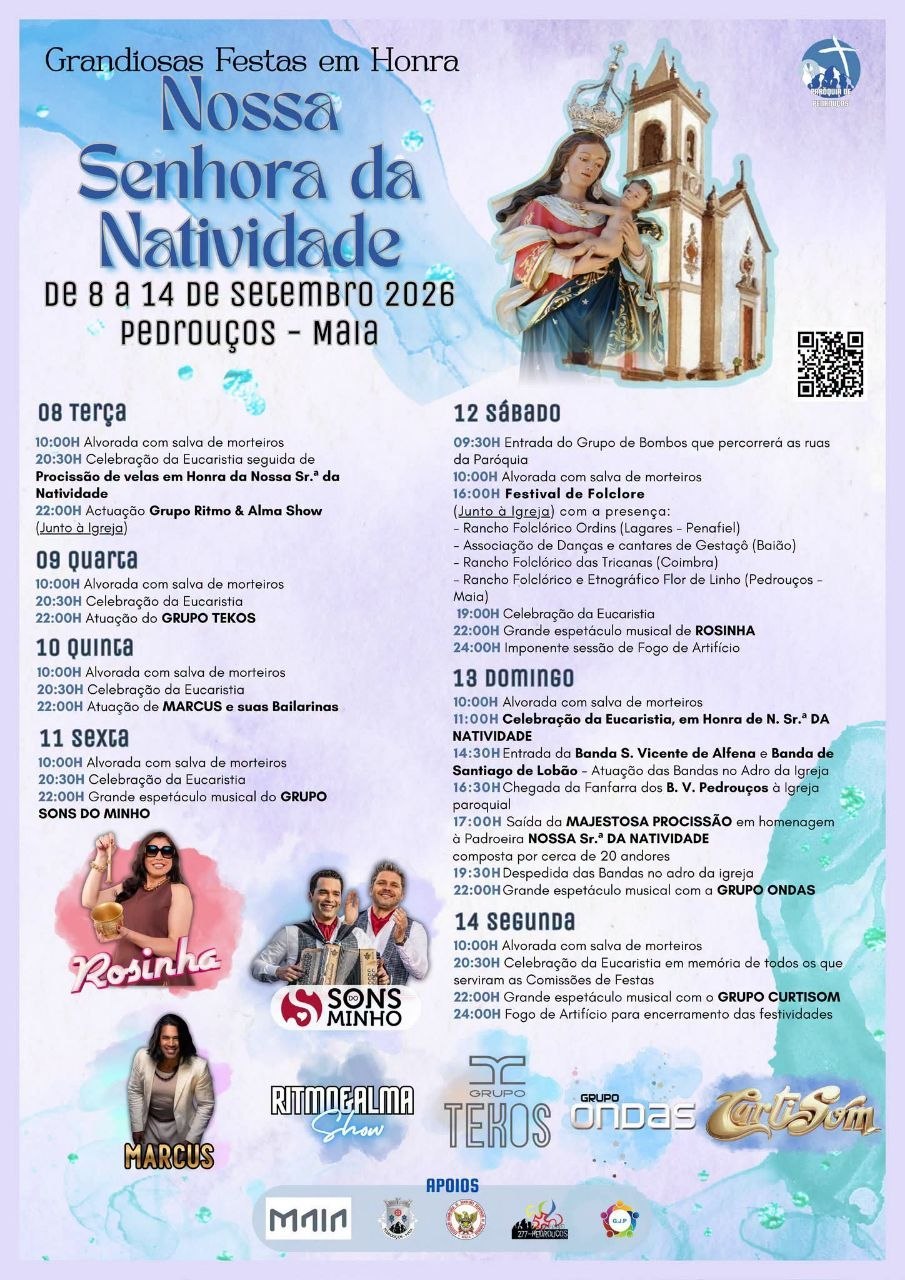
There are places that grow slowly, in the shadow of others, until the day comes when they assert themselves in their own voice. Pedrouços, in the municipality of Maia, is one such place. It is both the most recently established and one of the largest parishes in this council of the Porto district — a curious combination that says much about its character: young in its assertion, but ancient at its roots.<p>And ancient it truly is. As far back as the eleventh century, Pedrouços held the status of a city, a detail that surprises those who know it today and reveals how these lands were, from early on, a place of people and of importance. Later, over many centuries, Pedrouços lived as part of the neighbouring parish of Águas Santas, sharing with it roads, bell towers and devotions. That was its fate for generations — a land within another land, waiting for its moment.<p>That moment came after years of tenacious struggle by the inhabitants themselves, who never gave up on the dream of seeing their land recognised with its own name and identity. The persistence of its people, that beautiful stubbornness of those who love the ground they walk on, eventually prevailed. Pedrouços finally became a parish in its own right, and in that achievement lies the soul of a people who knew how to wait without giving up.<p>Throughout this long history, certain dates mark the pulse of the community. In 1743, a chapel was built in honour of Nossa Senhora da Natividade (Our Lady of the Nativity), a humble beginning for a devotion that would endure through the centuries. In 1928, that chapel received official recognition from the ecclesiastical authority of the Diocese of Porto — a step that was as much a civil as a religious milestone, signalling that Pedrouços was on its way to becoming a place in its own right. And in 1930, electricity arrived, primarily to light the streets, bringing new light to a place that was preparing to shine on its own.<p>The heritage heart of Pedrouços beats in its Igreja Paroquial (Parish Church), also known as the Igreja de Nossa Senhora da Natividade. Of Baroque architectural tradition, recognised by the Câmara Municipal da Maia as a religious building of heritage interest, it stands on Rua Igreja de Pedrouços as a point of reference and gathering. More than stone and lime, it is the place where the community comes together, prays and celebrates. It is here that the spiritual life of the parish finds its centre, and it is around this temple that the memories of several generations of pedrouceiros are woven.<p>The traditions of Pedrouços are inseparable from this devotion to Nossa Senhora da Natividade. It is around her figure that the community keeps an ancient faith alive, made of celebration and belonging. These traditions are a happy marriage between the sacred and the cultural, where music, dance and popular devotion go hand in hand. They are moments when the whole parish comes together, when neighbours become family again and when the community spirit, so dear to the people of the North, renews itself year after year.<p>And then there is the table — because no self-respecting Portuguese land can do without its flavours. Pedrouços shares with the entire Maia region a generous and straightforward cuisine. At its roots are carneiro, cabrito and anho assado (roast mutton, kid and lamb), served with grelos (turnip greens) that give them the taste of the countryside. There are rojões de porco (braised pork pieces), arroz no forno (oven-baked rice), the comforting arroz de cabidela (rice cooked in chicken blood), and dishes that do justice to the land, such as Cabrito à Maiato and Bacalhau à Lidador. It is hearty cooking, the kind eaten with family and remembered with longing.<p>For those wishing to discover the local produce up close, there is the feira de Pedrouços, which brings the parish to life one day a week. Among the stalls you will find fresh fruit and vegetables, freshly caught fish and cured meats that smell of tradition. It is a place of colour, voices and bargaining, where the pulse of a lively and hardworking community is immediately felt. To visit this market is to step into the true daily life of Pedrouços, far from postcards and close to its people.<p>Pedrouços is, in the end, a land that knew how to reinvent itself without forgetting where it came from. Ancient as few are, new in its assertion, it holds within itself the history of a people who fought to have a name. Those who visit carry with them the echo of a centuries-old devotion, the taste of an honest cuisine and the memory of people who made stubbornness a form of love for their land.