history
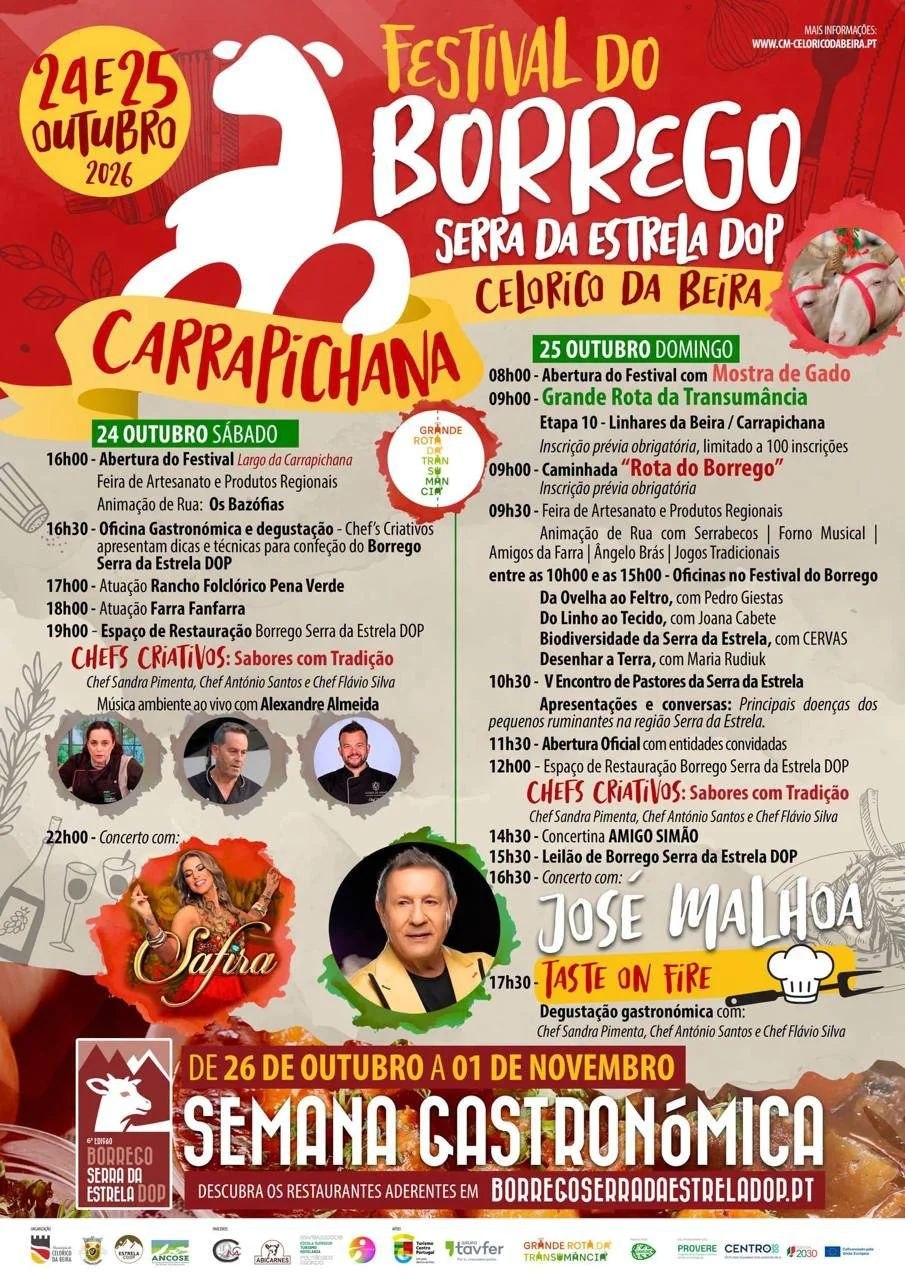
There are places that hide in the folds of the Beira, discreet as those who need no noise to matter. Carrapichana is one of them: a mountain village that holds within its ancient paths the memory of a pastoral Portugal, where time is measured by the pace of the sheep and the light that falls across the slopes of the Serra da Estrela.<p>The roots of this village stretch back centuries, and some tell that as early as the eighteenth century it featured among the possessions of King João V — a detail enough to remind us that, however modest it may seem today, Carrapichana had its place in the chronicles of the kingdom. For a long time the village was tied to the life of the lands around Linhares, before its fate became definitively bound to that of Celorico da Beira. Its people were, generation after generation, shepherds, farmers and traders in livestock and cheese, folk of calloused hands and firm word, who knew every path and every spring as if they had drawn them themselves.<p>Those who walk through Carrapichana find its Igreja Matriz (Parish Church) presiding over the rooftops, a spiritual anchor for a people who always carried faith and community alongside the toil of the land. In the surrounding area, traces of ancient burials survive, silent witnesses that others walked here long before us, leaving the land marked by their passing. It is also said that a monument once existed, attributed to the ancient peoples of the region, now vanished — one of those losses that sets the imagination to work, trying to reconstruct what the village might have been in its most distant beginnings. Carrapichana does not stand alone: a short distance away rises Celorico da Beira, with its proud castle watching over the plain, the Igreja Matriz de Santa Maria in its marriage of Romanesque and Gothic, the medieval Capela de São Pedro beside the walls, and the noble Casa da Torre, today returned to cultural life. It is an entire territory of stone and history that surrounds and enriches all who visit the village.<p>But it is in the customs of daily life that Carrapichana reveals itself most truly. This is shepherding country, and the lives of its people have always turned around the flock — the birth of the lambs, the tending of the ewes, the patient making of cheese in winter kitchens. For generations, the village played a significant role in the region's trade, setting in motion livestock and cheese that came from across the mountain. The market was, therefore, more than a business: it was a meeting place, somewhere prices and friendships were settled, where the health of the herds was assessed and conversation was measured just as carefully. Carrapichana has always known how to honour its highland identity, keeping alive the arts of the land and the knowledge of the shepherds, passed from parents to children like a precious thing that cannot be sold.<p>At the table, Carrapichana lives up to the fame of its land. Lamb is the undisputed king, and not just any lamb: the Borrego Serra da Estrela (Serra da Estrela lamb), raised on high-altitude pastures, tender and flavoursome meat that traditional cooking transforms into a feast. It is a flavour that tells the story of those who produce it, carrying the scent of mountain herbs and the sweetness of mother's milk. Alongside it reigns the Queijo da Serra (Serra cheese), buttery and intense, the product of the same flock and the same knowing hands. But the village larder does not end there: the mountain potato, firm and full of flavour, and the olive oil from local groves complete a wholesome gastronomy, made from products grown nearby and cooked with care. To eat in Carrapichana is to taste the territory itself — the altitude, the cold, the labour and the generosity of those who live from the land.<p>In the end, Carrapichana is a village that invites a slower pace: to notice the stones, to listen to the stories of the elders, to breathe in the smell of the countryside and to savour what the mountains offer at their finest. Small on the map, great in spirit, it is one of those corners of Portugal where one can still understand what it means to belong to a place.