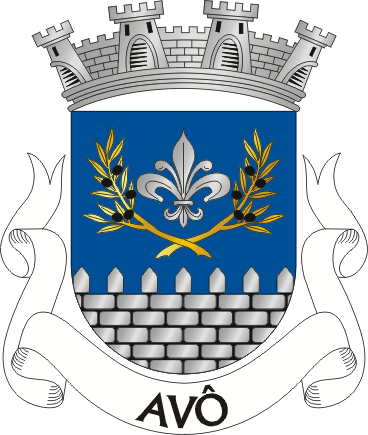
history
There are places born of an encounter, and Avô is one of them. Its name comes from the very spot where the river Alva and the stream of Pomares join hands, a point where, in former times, one could wade across the waters descending from the mountains. It is at this confluence, embraced by nature and flowing waters, that this ancient town of Beira Alta stands — today a freguesia of the concelho of Oliveira do Hospital, in the district of Coimbra.<p>The history of Avô is long and steeped in dignity. In 1187, it was D. Sancho I who granted it its first foral, a gesture that elevated it to the status of a town and gave it its own seat of power for centuries. Through generations, its people governed themselves, watched time and kings pass by, and kept alive the memory of a land that knew its own worth. That autonomy was lost in later times, when the town became part of the concelho of Oliveira do Hospital, but the pride and identity of Avô never faded — they remain etched in the stones, the streets, and the hearts of those born here.<p>Those who walk through Largo Conselheiro Cabral Metelo will find the most eloquent symbol of that past: the Pelourinho (pillory), now a listed monument, a silent witness to the times when Avô dispensed justice and asserted its rights. It is a Manueline monument that has withstood the passage of years, reminding all who pass that destinies were decided here and authority was exercised. Standing before it, it is easy to imagine the bustle of the old fairs, the town criers, and the voices of the people who brought this square to life.<p>The heritage of Avô does not end with the Pelourinho. The Igreja Matriz (Parish Church), medieval in origin and rebuilt in the eighteenth century, holds within it layers of history that overlap like pages of an old book. In its three side chapels, built in different eras — one in the fourteenth century, another in the sixteenth, and yet another in the seventeenth — one can read the patient devotion of several generations, each leaving its contribution of faith and art. Across the freguesia, there are eight chapels in all, including the Capela dos Ferreiros, small sanctuaries where the sacred blends with the daily life of the people.<p>But Avô reaches back to even more distant times. The ruins of an ancient castle recall the days when this land needed to defend itself and watch over the waters and roads from on high. And further still in time, the Anta da Arcaínha, an archaeological site that has survived the millennia, proves that even in prehistory there were those who chose these valleys to live, work, and bury their dead. In Avô, then, there is a human continuity that spans the ages — from the builders of ancient tombs to the men of the forais, from the devotees of the chapels to the people of today.<p>In its traditions, Avô keeps alive the festive and musical spirit that defines it. The town fills with colour and joy during the marchas populares, when its inhabitants parade through the streets to the rhythm of music and community. There is also a love of song, celebrated each year in a festival where children show their talent, ensuring that music passes from generation to generation. These are customs that speak of a united community, one that knows how to celebrate together and makes festivity a way of affirming who it is.<p>At the table, Avô shares the gastronomic richness of the entire Oliveira do Hospital region, where the cuisine is generous and full of bold flavours. Borrego (lamb) reigns supreme: served with roasted potatoes and turnip greens, as a caldeirada (stew), or transformed into arroz de fressura (rice with offal), it fills homes with fragrance on feast days. Also present are arroz de suã (spare-rib rice), torresmos (fried pork crackling), tibornada de bacalhau (salt cod dish), and truta acompanhada de presunto (trout with cured ham), a dish that marries river and mountain. Among the sweets, the choice is generous — arroz-doce (rice pudding), carolos, tigelada (baked custard), pão de ló (sponge cake), marmelada (quince paste), and the irresistible doce de abóbora com requeijão (pumpkin preserve with fresh cheese). And crowning everything, the Queijo Serra da Estrela, the emblem of these lands, alongside requeijão made from whey and local fruits such as the maçã bravo de Esmolfe. It is a table that tells the story of a territory where land, livestock, and the ingenuity of its people are transformed into flavour.<p>To visit Avô is to let oneself be carried by the meeting of waters, by the shade of ancient chapels, and by the echo of the marchas — a place small in size, but great in memory and in the affection it inspires.