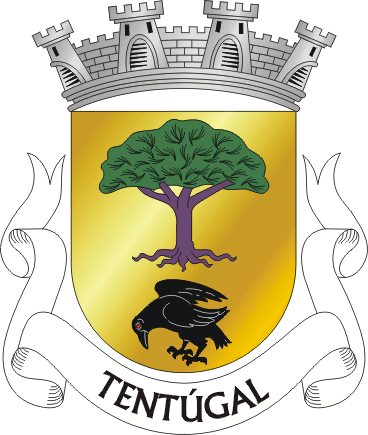
Igreja Matriz de Tentúgal: also called Nossa Senhora da Assunção or Santa Maria de Mourão, with its wayside cross; Misericórdia Church and Santa Casa: with the old Hospital of São Pedro and São Domingos; Convent and Church of Nossa Senhora do Carmo; Clock Tower: on the site of the old castle of Tentúgal; Palace of the Dukes of Cadaval: also known as the Palace of the Counts of Tentúgal; House with the Manueline window and gardens of Quinta do Lapuz; Póvoa de Santa Cristina: pillory, church and the ruins of the convent on Santo Onofre hill
about the place
Tentúgal is a town and parish in the municipality of Montemor-o-Velho, Coimbra district, with 2,046 inhabitants (2021 census). It received its charter in 1108 from Count Henry and Countess Teresa, was a municipal seat until 1853 and became a town in 1991. Its patron saint is Our Lady of the Assumption, also called Nossa Senhora do Mourão. It is known for the pastéis de Tentúgal, a traditional pastry of convent origin. Among its villages is Portela, which holds the festival of Our Lady of the Conception every summer.
history
The oldest documentary reference to Tentúgal dates from the year 980. In the 10th and 11th centuries the land changed hands several times between Muslims and Christians, until it was reconquered in 1034 by Gonçalo Trastamires, in the taking of Montemor-o-Velho. Count Henry and Countess Teresa granted it a charter in 1108, confirmed by Teresa in 1124, and King John III created the County of Tentúgal. It was a municipal seat until 1853, when the municipality was abolished, and became a town on 20 June 1991. From that past remain the Clock Tower, on the site of the old castle, the Palace of the Counts of Tentúgal, the Misericórdia and the Carmo Convent. It is also the home of the pastéis de Tentúgal, a traditional pastry of convent origin.