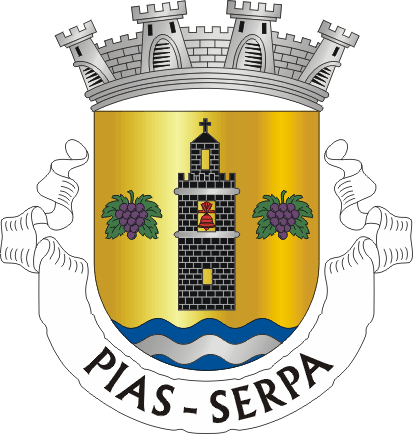
Hermitage of Saint Lucy: the patron saint's chapel, which tradition links to D. Nuno Álvares Pereira; Parish Church of Pias: the main church of the parish; Clock Tower: one of the village's monuments
about the place
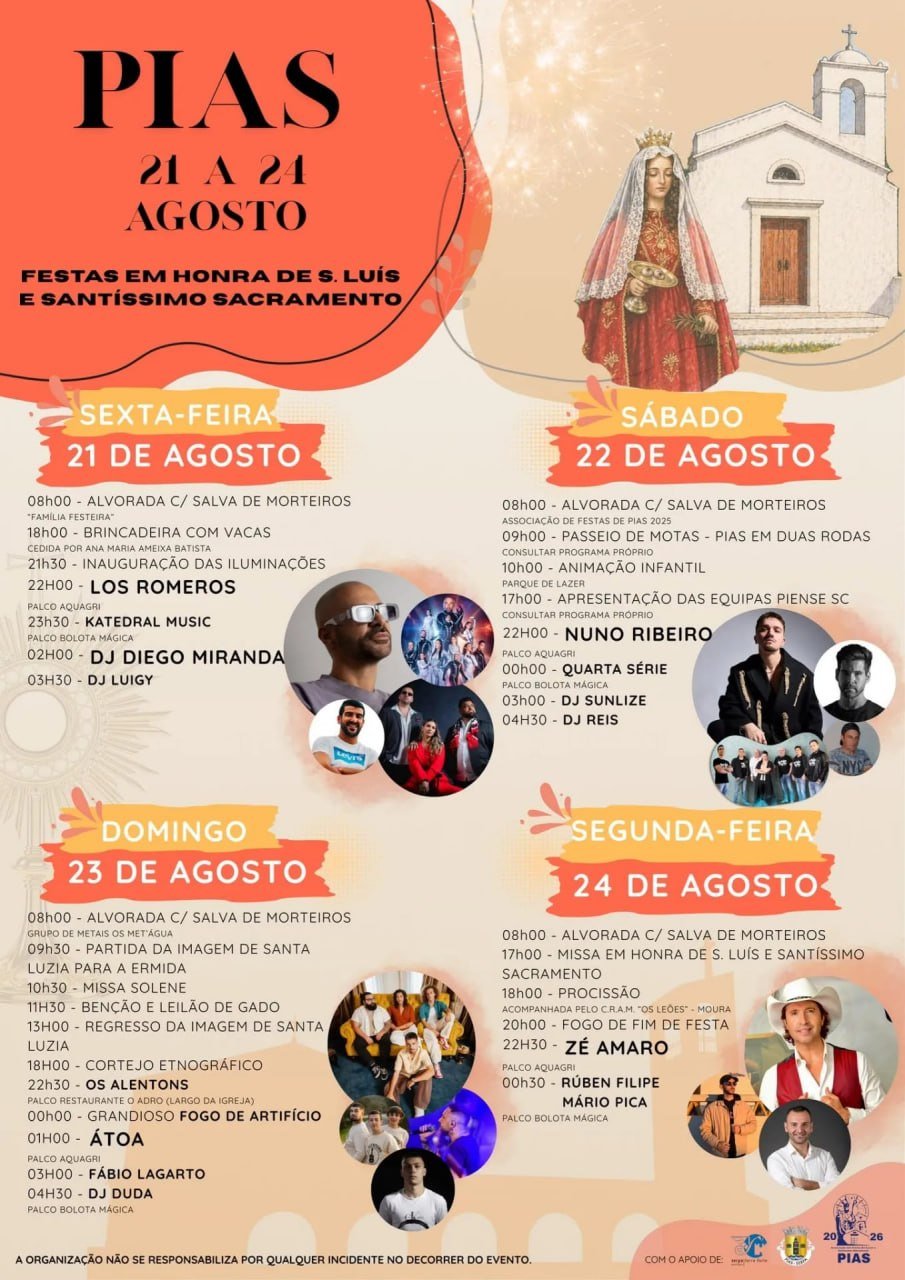
Pias lies in the municipality of Serpa, district of Beja, and has 163.68 km² and 2,542 inhabitants (2021). Its patron saint is Saint Lucy, who has her own hermitage. According to tradition, the name comes from the basins (pias) left in the rocks by quarrying granite millstones. It is a land of olive groves, of Cante Alentejano sung by male voices and of the "Festa Rija" of Saint Louis and the Blessed Sacrament, in August.
history
Pias is a parish in the municipality of Serpa, in the district of Beja, in the Baixo Alentejo, covering 163.68 km² with 2,542 inhabitants in the 2021 census. Its people are called pienses or, popularly, pieros. Its patron saint is Saint Lucy.
The village's history is tied to granite. According to tradition, quarrying millstones left holes in the rocks, and these basins (pias) and slabs filled with water in winter; the industry drew stonecutters and the place came to be called Pias or Aspias. Between 1864 and 1890 the parish belonged to the municipality of Moura, passing to Serpa by decree of 13 January 1898. In the censuses from 1878 to 1930 it appears as Pias e Orada; the name Pias was fixed in 1936. The population peaked at 6,408 in 1960.
Its heritage includes the Parish Church, the Clock Tower and the Hermitage of Saint Lucy, which tradition says was ordered built by D. Nuno Álvares Pereira after weary knights with injured eyes washed them in a spring; the saint is held to work miracles on eye ailments.
Pias is a land of "bread, olive oil and wine", of Cante Alentejano sung by male voices, of wrought iron and woodwork. On the table there is pennyroyal soup, field mushrooms, cabbage stew, black pork and game. The festive year runs from Saint Sebastian in January to the Festival of Saint Louis and the Blessed Sacrament, the "Festa Rija" of August.