history
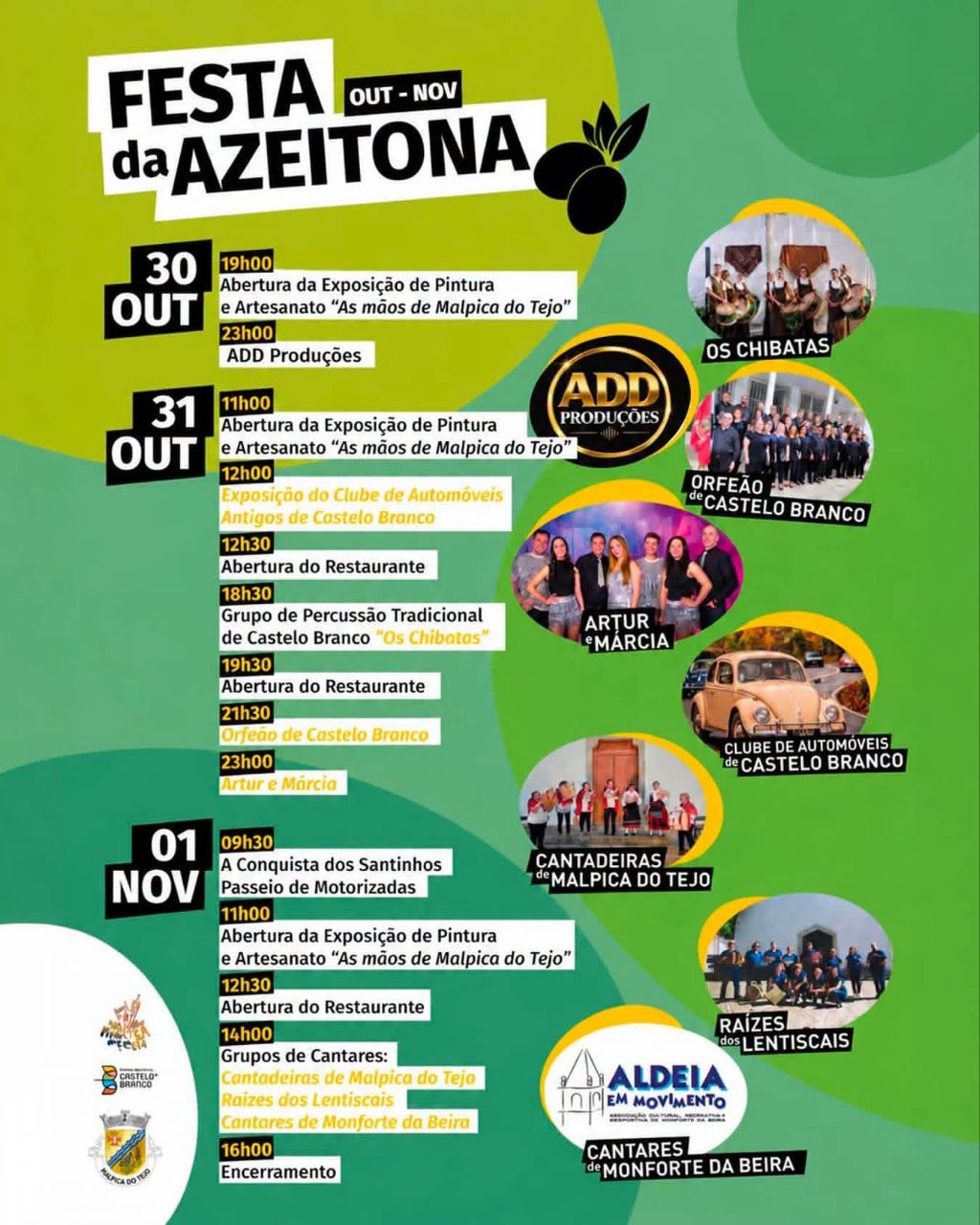
There are places that hold time within their stones, and Malpica do Tejo is one of them. This parish in the municipality of Castelo Branco, nestled in the heart of Beira Interior Sul, is one of those places where the past can be felt underfoot. Its vast lands have been walked and inhabited since remote times, and the traces left behind tell a story that spans millennia — from the Palaeolithic to the Iron Age, by way of a Roman presence that left an indelible mark on these fields.<p>After the splendours of Antiquity, however, these lands fell into a long silence. For centuries, the region remained dormant and almost forgotten, until, around the fifteenth century, the first clear records of the parish's existence began to appear. It was then that Malpica do Tejo began to write its documented history — that of the men and women who made this land their home, tilling it, building upon it, and rooting their people within it. It is this stubborn continuity, between the echo of ancient civilisations and the daily toil of the families who remained, that gives this parish its serene and profound character.<p>Those who wander through Malpica do Tejo encounter a heritage of ancient soul. The village church, built in the sixteenth century, stands as a living testament to the faith that accompanied these people across generations. Alongside it stand the Capela de São Bento (Chapel of São Bento) and the Igreja de São Domingos (Church of São Domingos), small sacred landmarks that punctuate the landscape and invite quiet reflection. But the parish's heritage extends far beyond the religious: here one finds the Fornalha de Cal do Monte dos Cancelos, a memory of crafts and knowledge that once gave life to the land, as well as medieval tombs and Roman ceramics that confirm the deep ancestry of these places.<p>Among the most enchanting corners is the Ponte Velha over the Rio Ponsul, a stone crossing that spans the waters and seems to suspend time itself. It is one of those humble yet beautiful structures that link banks and eras, and that make any walk through Malpica do Tejo a reunion with history. For those wishing to broaden their horizons, not far away, already in Castelo Branco, the Miradouro de São Gens offers generous views beside the Igreja de Santa Maria do Castelo, while the Paço Episcopal and its gardens enchant all who seek refined beauty and the elegance of bygone times.<p>In its traditions and customs, Malpica do Tejo keeps the rhythm of inland lands, where the calendar is shaped by faith and festivity, by the gathering of people and the celebration of the earth's fruits. Olive growing holds a prominent place here, and the flavours of azeite (olive oil) are a strong presence in village life, revealing how deeply the olive tree and its liquid gold are woven into local identity. These agricultural roots, built on patience and respect for the land, continue to give meaning to the community and to unite generations around their shared traditions.<p>At the table, Malpica do Tejo does not disappoint those who appreciate honest, unhurried cooking. The Miga de Peixe de Malpica do Tejo is a dish that speaks of this land, accompanied by other local delicacies that bring fame to the region: bucho (stuffed tripe), queijo picante (intensely flavoured spicy cheese), golden and fragrant mel (honey), and the comforting sopa de couve com feijão (cabbage and bean soup). In the realm of sweets, filhós, bicas, broas de mel and borrachões sweeten any visit and bring any meal to a fitting close. And because Malpica do Tejo is also a daughter of Castelo Branco, it shares with the city and its region a recipe heritage of rare richness — from the celebrated empadas to renowned cheeses such as Queijo de Castelo Branco, Amarelo da Beira Baixa and Picante da Beira Baixa, not forgetting cabrito estonado, maranhos, bucho recheado and migas de batata com tomate. It is an entire Beira Baixa served on a plate, with the generosity and honesty of those who cook as tradition demands.<p>Malpica do Tejo is, at heart, an invitation to slow down. To let oneself be carried by the murmur of the Ponsul, to touch the stones of its churches and bridges, to savour the flavours born there and to share time with people who keep ancient knowledge alive. A small land in numbers, but vast in memory — and one of those places that stays with us long after we have left.