what to see
Igreja do Rosário (Igreja do Rosário), an 18th-century church featuring a remarkable sculptural ensemble and an organ brought from Germany.<p>Capela de Nossa Senhora do Rosário, built in the early 19th century, a gathering point for traditional festivities.<p>Miradouro da Chã da Macela, with views over the island and the ocean.<p>Convento de Santo António, dating from the 17th century.
history
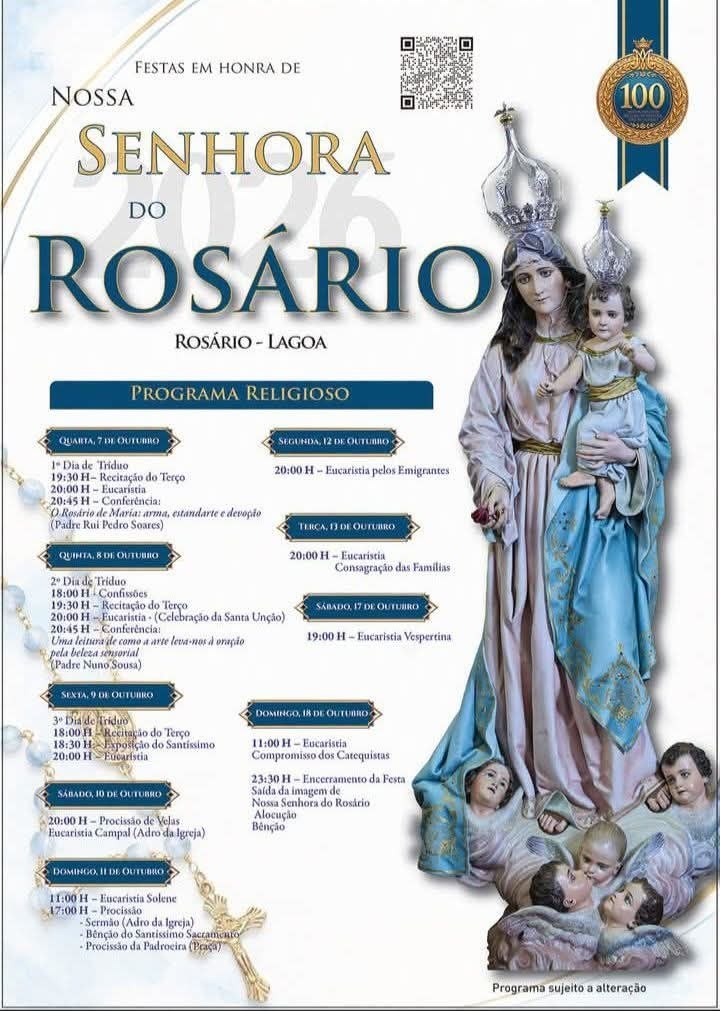
There are places born from water's whim, and Lagoa is one of them. It is said the name comes from a coastal lagoon that, there beside the sea of São Miguel, gathered its waters and lent the land its identity. It is a humble and poetic beginning, this of a settlement baptised by the very mirror that nature placed at its door, between the island and the Atlantic that surrounds it.<p>The history of these people gained weight and purpose when the neighbouring land of Vila Franca do Campo was devastated by the great earthquake of 1522. Faced with disaster, life shifted, sought new directions, and Lagoa grew in importance, organising itself around its Igreja Matriz de Nossa Senhora do Rosário (Parish Church of Nossa Senhora do Rosário), built in the sixteenth century. This is the parish's birthmark: a community that knew how to reinvent itself after tragedy, that made faith and hard work the foundation of its continuity, and that over the centuries has gained the face of a town without losing the soul of an Azorean village.<p>To stroll through Lagoa is to find, at every corner, a place with a story to tell. The Igreja do Rosário is the heart of that heritage, housing within its walls a remarkable sculptural ensemble and an organ brought from Germany, testament to how this island land knew how to bring the best of distant worlds to its own shores. Beside it, the Capela de Nossa Senhora do Rosário remains one of the most beloved and ancient spots in the town, a gathering point for traditional festivities and tended with the affection of those who restore what they love. The Jardim de Nossa Senhora do Rosário offers a corner of peace and greenery, and the Merendário dos Remédios invites you to slow your step, break bread in the shade and converse without haste. Those in search of the horizon will find it at the Miradouro da Chã da Macela, from where the island opens up into landscape and the gaze is lost between the green of the land and the endless blue of the ocean. Nor is there any shortage of the Monumento aos Combatentes, a memory carved in stone of those who left and those who served, a gesture of gratitude that the land does not forget.<p>In its traditions, Lagoa remains faithful to the devotion that has always sustained it. The cult of the Divino Espírito Santo runs through the community and keeps alive the practices passed down from generation to generation, with the sharing, the open table and the spirit of brotherhood that define the Azorean at their finest. Music is another thread of that collective memory, with the Banda Lira do Rosário giving voice and soul to celebrations, and folk traditions preserving, in dance and song, the ancient gestures of a popular culture that refuses to forget where it comes from. These are customs that cannot be decreed or taught in books: they are learnt by watching, listening and feeling, in the circle of neighbours and in the fervour of the decorated streets.<p>And then there is the table, that universal language with which the Azores speak to the world. In Lagoa, the sea enters the kitchen through lapas grelhadas com manteiga e alho (grilled limpets with butter and garlic), a simple and generous snack that tastes of sea air and good company, and through caldeirada de peixe (fish stew), a sharing dish that brings together the ocean's abundance in a single steaming pot. To sweeten the palate, the soft bolo lêvedo and the queijadas de Vila Franca, pastries that run in the veins of this part of the island and delight all who taste them. And to close the meal, a glass of licor de maracujá (passion fruit liqueur), a tropical aroma that the Azores have made their own, leaving on the tongue the warm sweetness of the islands. To eat in Lagoa is, at its heart, to know the land from within: in its flavours are written the history, the geography and the welcoming character of its people.