what to see
Igreja de Nossa Senhora da Guia (Church of Nossa Senhora da Guia), also known as the Capela de Ferrel, classified as a Property of Public Interest, with an atrium, stone cross and rear garden.<p>Capela de Nossa Senhora dos Remédios (Chapel of Nossa Senhora dos Remédios), a historic site linked to a legend about a hidden image discovered in the 12th century.<p>Ermida de Santo Estêvão (Chapel of Santo Estêvão), a small place of worship on the Baleal peninsula, possibly dating from the 16th or 17th century.
about the place
Perched above the Atlantic, in the municipality of Peniche, Ferrel stretches between cliffs and wide horizons, where the sea blends with the green of the vegetable gardens that still supply the region. As early as the beginning of the nineteenth century, residents dreamed of having their own local governance, a longing that passed through generations before finally taking shape. It is home to the Capela de Nossa Senhora da Guia (Chapel of Nossa Senhora da Guia), an invocation of the patron who protects those who depart and return.
history
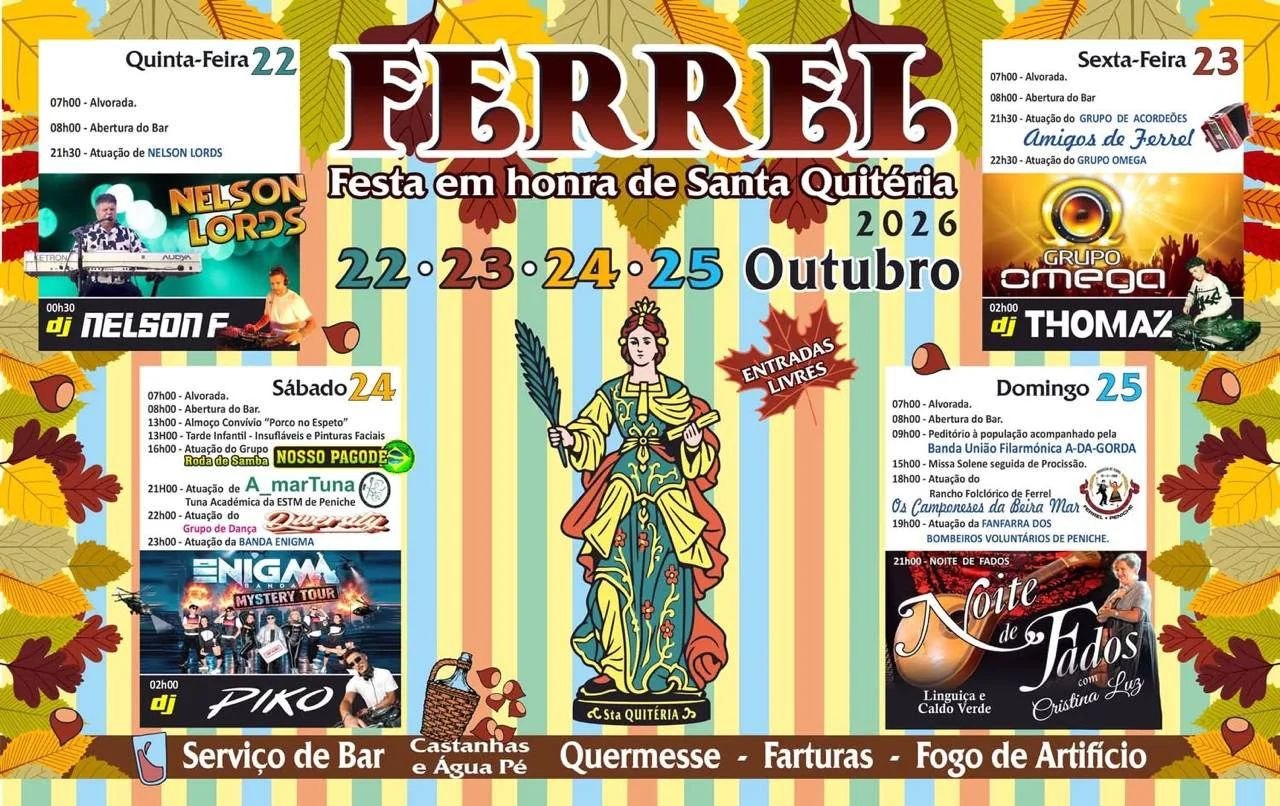
Perched above the Atlantic, where the coast of Peniche adorns itself with cliffs and wide horizons, lies Ferrel — a land of stubborn, hardworking people who, over the centuries, have known how to assert their own identity. The desire to be masters of their own destiny is nothing new: as far back as the early nineteenth century, the local residents dreamed of having their own voice and their own governance, a longing that passed through generations and only much later took definitive shape, thanks to the persistence of its people and the decisive drive of a committee of committed residents who saw the cause through to the end. <p> This is the very stuff of which Ferrel is made: the tenacity of those who live between the sea and the land, between the fishing nets and the vegetable gardens. The settlement grew to the pulse of the nearby ocean and the salty smell that clings to the skin, but also to the generous green of the fields that, to this day, bring fresh vegetables to the region's tables. Those who walk the streets of Ferrel sense that here everyday life is made of small, genuine things — the neighbour who says good morning, the fisherman returning home, the well-tended garden at the back of the yard. It is a land that was recognised for its size and its own vitality, raised to the status it deserved by the merit of its people. <p> In terms of heritage, Ferrel holds a discreet but ancient treasure: the Capela de Ferrel (Chapel of Ferrel), also known as the Capela de Nossa Senhora da Guia, listed as a Property of Public Interest. It is one of those places where time seems to slow down, where devotion and history join hands between whitewashed walls. The invocation of Nossa Senhora da Guia — she who protects those who depart and those who return — says much about a community turned towards the sea, accustomed to entrusting crossings and homecomings to faith. To visit this chapel is to enter a piece of the spiritual heart of the land, a small sanctuary that endures and continues to gather around it the collective memory of Ferrel. <p> In the surrounding area, Peniche opens up its range of churches and sanctuaries, with the so-called Rota das Igrejas inviting those who enjoy exploring at a leisurely pace. In the historic centre, the Santuário de Nossa Senhora dos Remédios, the Igreja de São Pedro and the Igreja da Misericórdia stand out as places of popular pilgrimage where remarkably beautiful eighteenth-century azulejos can be admired. For those who make Ferrel their starting point, there is thus a whole territory of stone and faith to explore, in a landscape where the sacred and the salty are intertwined. <p> The traditions of Ferrel are deeply rooted in the identity of the land, shaped by communal celebration and a sincere attachment to its roots. Among the customs the village holds with pride, the celebrated corrida dos burros stands out — a longstanding tradition that delights young and old alike and spans the generations, keeping alive the memory and festive spirit of its people. It is in these shared rituals — a blend of popular joy and belonging — that Ferrel reveals itself at its most authentic, bringing together those who are from the land and those who visit it in one common embrace. <p> At the table, Ferrel takes part in the great feast of flavours that is the gastronomy of this coastal strip, where the sea reigns and sets the menu. Sardinha (grilled sardine), freshly caught robalo (sea bass) and percebes (barnacles) from the Berlengas are the stars of an honest and flavoursome cuisine. The queen of the pot is caldeirada (a hearty fish stew), that fresh fish braise into which the vegetables from Ferrel's local gardens are added as a matter of course — and it is here that land and sea meet in a single dish. But there is more to savour: massada de garoupa (grouper pasta stew), sequinho de cancarro and tempura de peixe galo are dishes that do justice to the talent of a region that knows how to treat its fish with respect. The secret is always the same — fresh, local ingredients, handled with the wisdom of those who know the sea like the back of their hand. In Ferrel, eating is also a way of celebrating the land and its people. <p> A land of faith, festivity and fine flavours, Ferrel is one of those villages that wins you over without fanfare — through the honesty of its daily life, the beauty of its coastline and the hospitality of those who call it home. Those who pass through here will seldom leave without the wish to return.