history
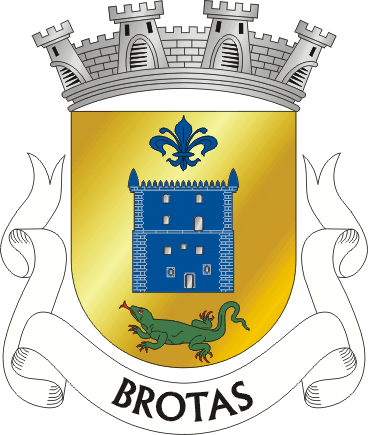
Brotas is a parish in the municipality of Mora, in the district of Évora, in the Central Alentejo, covering 83.15 km² with 340 inhabitants in the 2021 census. Its people are known as brotenses. The village has the Aldeia Velha (old village) and the Aldeia Nova (new village), the latter formed after the First World War by the owners of a neighbouring estate.
Until 1834 the parish formed the municipality of Águias, which received its charter in 1520 and had its seat first in the village of Águias and, from the end of the 18th century, in Brotas. In 1535 the Cardinal-Infante Dom Afonso, Bishop of Évora, moved the seat of the parish to Brotas. When the municipality was abolished in 1834, the parish passed to Mora and, between 1855 and 1861, with Mora also abolished, it belonged to Montemor-o-Novo. In the censuses from 1864 to 1930 it was called Águias or Brotas, and the current name dates from 1936.
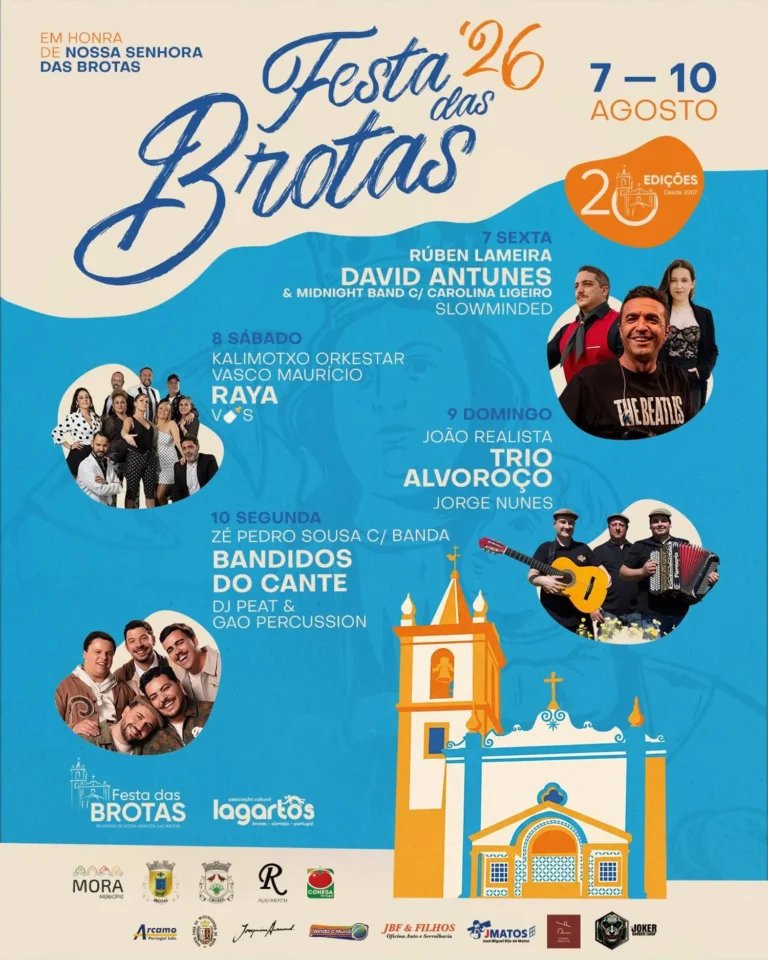
Its great monument is the Sanctuary of Our Lady of Brotas, a Property of Public Interest since 1956, which grew out of a hermitage that already existed before 1424. Legend has it that around 1400 a cow fell into a ravine where the church now stands and that, as a shepherd was about to skin it, the Virgin and Child appeared to him and the cow came back to life. The church, built in stages from the 16th to the 18th century, is lined with tiles from those centuries and has an outdoor altar for open-air masses; around it stand the lodgings that the brotherhoods of Palmela, Mora, Cabeção, Setúbal, Lavre and Cabrela built for pilgrims. The Torre das Águias has been a National Monument since 1910. The festivities in honour of Our Lady of Brotas are held on the second weekend of August.