The Mosteiro de Santa Maria de Cárquere, in Cárquere, a remarkable example of Portuguese Romanesque architecture
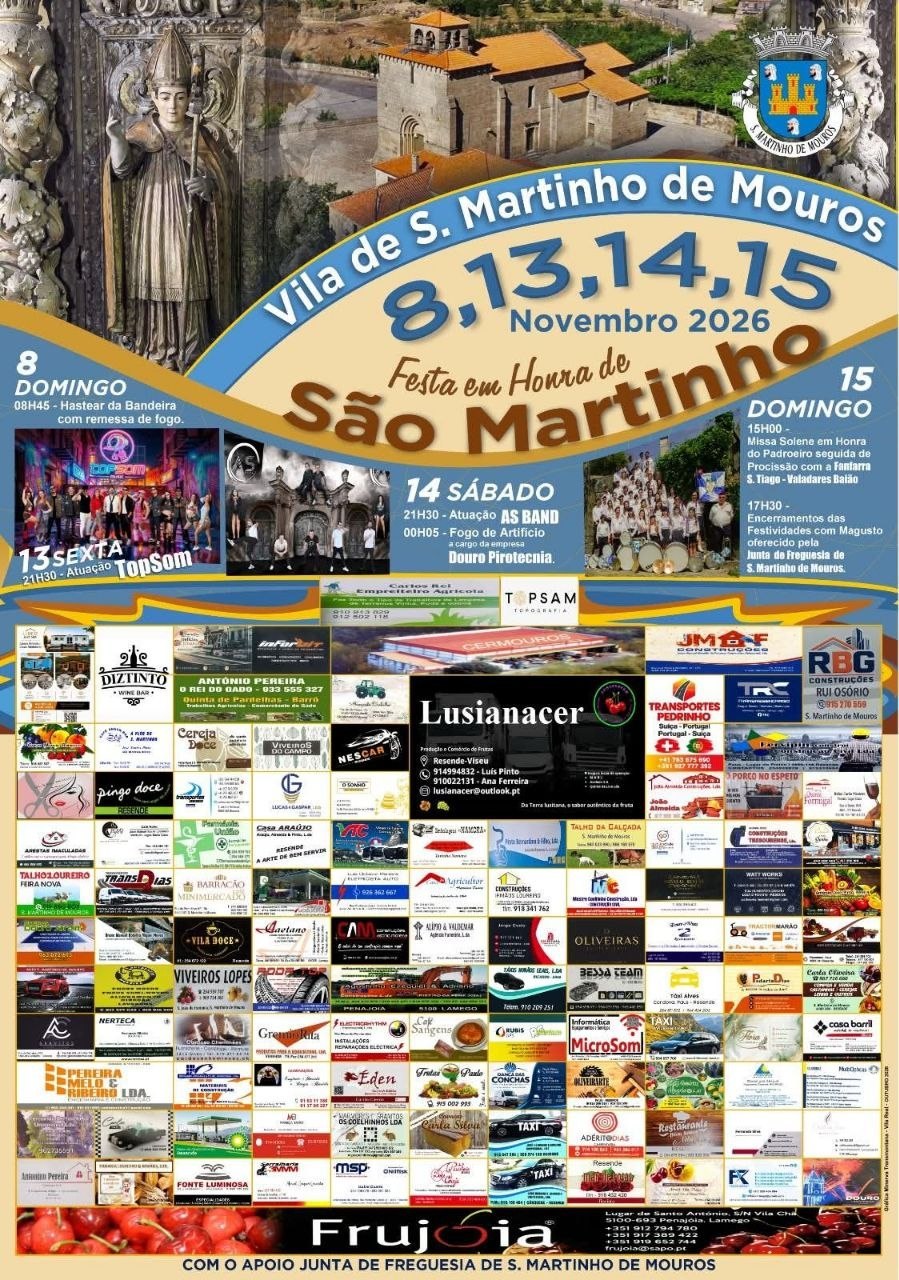
The Church of São Martinho de Mouros, Romanesque, the core of the ancient medieval municipality that gave rise to the territory
The Cachoeira da Fumaça and the Cachoeira da Água Branca, waterfalls set within the mountainous landscape of the municipality's interior
The terraced vineyards of the Douro Vinhateiro, a UNESCO World Heritage Site, explored on foot or by boat along the southern bank of the river
about the place
Resende occupies the southern bank of the Douro, the natural boundary with Baião and Mesão Frio to the north, opening southward towards the mountain ranges that separate the Douro from Castro Daire and Cinfães. The landscape combines vineyard terraces with cherry orchards, in a territory that preserves medieval memory in stone. The Mosteiro de Santa Maria de Cárquere and the Igreja de São Martinho de Mouros stand as witnesses to the Romanesque style that endured through the centuries, and it was precisely around the ancient medieval municipality of São Martinho de Mouros that the territory of Resende gradually took shape, until the administrative reform of 1855 fixed its current boundaries.